“I’d settle for the Guinness”
All Creatures Great and Small“I’d settle for the Guinness” is James Herriot’s closing judgment after two visits leave him weighing material comfort against familial tenderness. Jennie Alton’s small plan to bring her tired father a bottle turns an ordinary drink into the expression’s central measure of what makes a life worth choosing.
The Bottle and the Gesture
Jennie intends to cycle to the village for Guinness, a journey of two miles followed by the climb back up the hill. She counts sixpence and a few coppers into her palm, explaining that her father has been awake all night waiting for a heifer to calve. She wants him to have the drink with dinner, as he likes it, and to be surprised. The modest sum, the difficult ride, and the care taken to keep the errand secret give the bottle its significance: it is a practical kindness shaped around her father’s weariness and preferences.
Her father, Tim Alton, remains sprawled in a chair, but as Jennie speaks he turns to look at her and smiles. She meets his gaze with a happy, secret look before mounting her bicycle and pedalling down the track. The exchange is quiet, yet its gestures make their mutual affection visible without requiring either of them to explain it.
The Comparison Behind the Expression
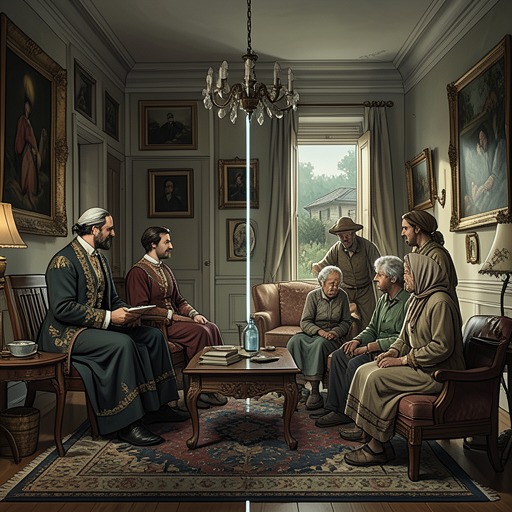
The phrase follows the narrator’s comparison between two households. Henry Tavener’s riverside mansion, fine clothes, well-kept hands, books, pictures, and clocks stand against Tim Alton’s crumbling farmhouse and the daily grind of staying alive on an exposed hilltop. But the narrator’s attention settles not only on differences in comfort: he contrasts Julia Tavener’s contemptuous look at her father with the shining tenderness in Jennie’s.
The conclusion is not presented as an easy equation in which poverty itself is preferable. The narrator acknowledges that it becomes increasingly difficult to decide who gets more from the two lives. Only after holding both households in view does he imagine having to choose, and settle on the Guinness. The choice weighs the affection witnessed in the farmhouse more heavily than the visible advantages of the mansion.
Meaning and Narrative Function
Guinness gives the reflection a concrete, deliberately modest ending. Rather than resolving the comparison through a general claim about happiness, the narrator returns to Jennie’s particular act of care: a bottle bought with small coins, carried uphill, and intended as a surprise for a father who has worked through the night. The phrase compresses the contrast between material circumstances and human connection into an everyday preference. Its warmth depends on the scene’s specific tenderness, while the narrator’s hesitation preserves the complexity of judging lives from the outside.